



How to Create a Soundproof Room in Singapore
2026-03-24 23:50
How to Create a Soundproof Room in Singapore That Actually Works
Singapore's average urban apartment faces noise levels above 60 decibels — enough to wreck your focus, disturb your sleep, and drag down productivity. If you've ever tried to concentrate while a neighbour's renovation echoes through the walls or the MRT rumbles beneath your floor, you already know the problem.
Building a soundproof room in Singapore goes beyond simply "blocking noise." It's about designing a space where you can actually think, rest, and work without interruption. Whether you're setting up a home recording studio in your HDB flat, upgrading a corporate meeting room, or just want a bedroom that feels like a real retreat, the right approach to soundproofing makes all the difference.
This guide walks you through practical steps, proven materials, and real-world design strategies — including insights on soundproof panels Singapore, soundproof wall Singapore treatments, acoustic panels, and soundproof window panel solutions — so you can build a room that delivers results, not just promises.
Understanding the Basics of a Soundproof Room in Singapore
Before you start buying panels or tearing into walls, it pays to understand what actually makes a soundproof room work. A common misconception is that soundproofing means total silence. In practice, it's about controlling unwanted noise so the space serves its purpose — whether that's recording music, holding private meetings, or getting a decent night's sleep.
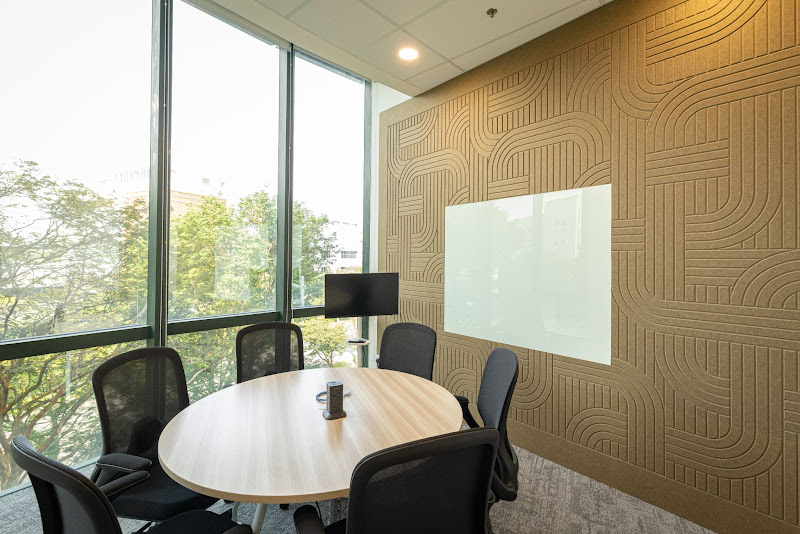
1. What Is a Soundproof Room?
A soundproof room is designed to do two things: keep external noise from getting in and prevent internal sound from leaking out. This is accomplished through a combination of sound absorption, sound blocking, and vibration reduction.
In Singapore, where apartments sit side by side and MRT trains run under residential blocks, even modest improvements can make a dramatic difference. The tools for achieving this include architectural design choices, construction materials like dense drywall and mineral wool, and interior products such as soundproof panels Singapore and acoustic panels. Curious about the mechanics? Learn more about how do sound panels work to understand the science behind acoustic treatment.
2. Key Principles of Soundproofing
Every effective sound insulation room relies on four core principles. Understand these, and you'll be able to evaluate any product, technique, or contractor recommendation with confidence:
Mass — Heavier, denser surfaces block more sound. Adding layers of gypsum board, concrete panels, or high-density insulation to walls, ceilings, and floors is one of the most reliable ways to stop noise. Materials are often rated using Sound Transmission Class (STC), which measures how well a structure attenuates airborne sound.
Decoupling — Vibrations travel through connected surfaces. By separating structural elements — think double-stud walls, floating floors, or isolated ceiling systems — you break the path that sound uses to move between rooms. This is critical for studios, offices near busy roads, and apartments with shared walls.
Absorption — Soft, porous materials like acoustic panels and soundproof panels capture sound energy and convert it into tiny amounts of heat, reducing echoes and improving clarity. This is especially important in music rooms, meeting spaces, and any sound insulation room where audio quality matters.
Sealing Gaps — A wall can have a perfect STC rating and still leak sound if there's a crack around the door frame or a gap beneath the window. Acoustic caulking, weatherstripping, and high-quality seals around every opening are non-negotiable.
When you combine mass, decoupling, absorption, and airtight sealing, you're working with physics — not gimmicks. That's what separates a soundproof room that actually works from one that just looks the part.
3. Common Noise Challenges in Singapore
Singapore's dense urban layout creates acoustic challenges you simply won't find in suburban houses. If you're planning a soundproof room here, you need to account for:
Traffic and MRT noise — Low-frequency vibrations and rumbles that penetrate concrete walls and floors, particularly in apartments along major roads or above underground rail lines.
Neighbourhood and communal living sounds — In HDB flats and condos, conversations, footsteps, TV noise, and appliance vibrations travel between units through shared walls, ceilings, and floors.
Office chatter and equipment — Open-plan workspaces, co-working hubs, and commercial buildings deal with persistent reverberation and background noise that hampers concentration.
Effective soundproofing in Singapore must be tailored to these real-world conditions — not theoretical lab performance. The right combination of wall treatments, acoustic panels, and noise cancelling wall strategies can turn a noisy space into one that's genuinely quiet and comfortable.
Planning Your Soundproof Room in Singapore
Good soundproofing starts well before you mount a single panel. Rushing into materials without a plan is a fast way to waste money and end up with disappointing results. Take the time to define your goals, map your noise sources, and set a budget that reflects realistic expectations.
1. Define the Purpose of Your Room
What the room is for determines everything — from the type of panels you choose to where they go on the walls:
Home studio or music room — Prioritise bass control, vibration isolation, and sound absorption. High-quality soundproof panels help eliminate echo, while decoupled walls prevent low-end frequencies from bleeding into adjacent rooms. This is where building a proper noise cancelling wall structure really pays off.
Office or meeting room — Focus on reducing speech leakage and reverberation. Properly placed acoustic panels improve clarity during calls and meetings, and keep confidential conversations private.
Bedroom or relaxation space — Block external noise from traffic, construction, and neighbours. A combination of dense wall treatments and strategic panel placement creates the calm, quiet environment you need for proper rest.
2. Identify Noise Sources
To design a soundproof room that performs under real conditions, pinpoint exactly where the noise is coming from — both outside and inside the space:
External noise: Traffic, construction activity, MRT vibrations, neighbourhood sounds.
Internal noise: Air-conditioning units, appliances, foot traffic within the home, office chatter.
Once you've mapped these sources, you can make smarter decisions about where to place soundproof panels, which walls need additional mass, and whether you need a soundproof window panel to address weak points around glazing. Every decision should target a specific noise problem — that's how you get maximum impact from your budget.
3. Set a Realistic Budget
Soundproofing projects in Singapore range from straightforward DIY sound insulation upgrades — like adding foam panels and sealing gaps — to full-scale construction involving decoupled walls, acoustic doors, and professional installation. The key is to allocate your budget early and align it with your acoustic goals.
Investing in higher-performance acoustic panel solutions may cost more upfront, but it typically delivers better noise reduction and lasts far longer than budget alternatives. Think of it as a one-time investment in long-term comfort and productivity.
Choosing the Right Materials for a Soundproof Room Singapore
Materials make or break a soundproofing project. The panels, insulation, sealants, and treatments you select directly affect how much noise gets through — and how the finished room looks. Here's a breakdown of what works, section by section.
1. Soundproofing Walls
Walls are the foundation of any effective soundproof wall Singapore project. The right wall treatments don't just block noise — they improve the overall acoustic quality of the space:
Double-layered drywall — Adding a second layer of drywall significantly increases the wall's mass. Combined with acoustic sealant at every joint and seam, this approach provides strong noise isolation for apartments, offices, and studios.
Insulation materials — Filling wall cavities with mineral wool, rock wool, or eco-friendly recycled PET insulation absorbs sound energy and reduces transmission. Quality insulation is especially valuable in Singapore's noisy urban settings where privacy is at a premium.
Decoupled walls — Building a secondary wall separated by resilient channels stops vibrations from travelling between rooms. This technique delivers superior acoustic isolation for home studios, music rooms, and offices next to high-traffic areas — without eating up much extra floor space.
For many projects, a DIY sound insulation approach combining extra drywall with cavity insulation can achieve impressive results at a reasonable cost. More demanding environments may call for full decoupling.
2. Acoustic Panel Singapore
Acoustic panels are one of the most versatile tools for any soundproof room. Mounted on walls, ceilings, or freestanding partitions, they deliver multiple benefits:
Echo reduction — Essential for recording studios, offices, classrooms, and home theatres. Acoustic panels absorb sound reflections, making the room quieter and more focused.
Better speech clarity — In meeting rooms, lecture halls, and co-working spaces, well-placed panels ensure conversations are clear and intelligible, even in large or hard-surfaced rooms.
Design flexibility — Modern acoustic panel options come in a wide range of colours, textures, and finishes that complement any interior — from minimalist office designs to warm residential spaces.
Many of today's best acoustic panel solutions in Singapore are made from recycled PET — a material that combines strong sound absorption with genuine environmental responsibility. These panels are a smart choice for businesses, schools, and homeowners who care about sustainability as much as performance.
3. Soundproof Panels
While acoustic panels focus primarily on absorption, soundproof panels tackle both airborne and impact noise. When layered with proper wall insulation, they can dramatically reduce sound transmission. Common types include:
Foam panels — Lightweight and affordable, foam panels absorb mid- to high-frequency sounds. A popular choice for home studios, offices, and classrooms.
Fabric-wrapped panels — Polished aesthetics alongside solid acoustic performance. Ideal for meeting rooms, hospitality venues, and any space where looks matter as much as function.
Mass-loaded vinyl (MLV) panels — Dense and heavy, MLV panels excel at blocking noise through walls, ceilings, and floors. A go-to solution for both residential and commercial projects requiring maximum sound isolation.
The key is matching the right panel type to your specific noise challenge. Strategic positioning ensures your soundproof panels Singapore investment delivers measurable results without overwhelming the room's design.
4. Ceilings and Floors
Sound doesn't just travel through walls — it moves through ceilings and floors too, especially in Singapore's multi-storey apartment blocks. A truly effective soundproof room addresses all surfaces:
Acoustic ceiling treatments — Suspended soundproof panels, ceiling clouds, and acoustic baffles reduce echo from above and block noise from upper-floor neighbours.
Floor treatments — Thick carpets, area rugs, and dedicated acoustic underlays absorb impact noise and vibrations. Particularly important for apartments with hard flooring, where footsteps and dropped objects reverberate into adjacent units.
Combining wall, ceiling, and floor treatments creates a fully enclosed acoustic environment — one where noise is controlled from every direction.
5. Doors and Windows
You can have the best panels and insulation in the world, but if sound leaks around your doors and windows, the whole system underperforms. Pay close attention to these often-overlooked weak points:
Acoustic doors — Solid-core doors with high-density seals are far more effective than standard hollow doors. A proper acoustic door eliminates the gap that lets sound slip through.
Window treatments — A soundproof window panel, double-glazed glass, or laminated glazing combined with heavy acoustic curtains can block a significant amount of external noise. Especially relevant for rooms facing busy streets or construction sites.
Seals and gaskets — Fill every gap and crack around door frames and window frames with acoustic sealant. Even small openings can undermine an otherwise well-designed soundproof room.
Getting doors and windows right ensures that the materials and effort you've invested elsewhere actually perform to their full potential.
Achieve Peace and Productivity with a Soundproof Room in Singapore
Creating a soundproof room in Singapore is absolutely achievable — it just requires thoughtful planning and the right combination of wall treatments, soundproof panels, and acoustic solutions. When you account for your specific noise sources, define a clear room purpose, and factor in Singapore's unique urban challenges, the result is a space that's genuinely private, productive, and peaceful.
Whether it's a home office, a professional recording studio, a school classroom, or simply a quiet bedroom, the principles remain the same: add mass, decouple where possible, absorb reflections, and seal every gap.
Feltcombo: Singapore's Leading Acoustic Experts
Feltcombo delivers high-performance, eco-friendly acoustic panels and soundproof panels engineered specifically for Singapore's urban noise environment. Manufactured using recycled PET, our products combine genuine sustainability with superior sound absorption — no compromises on either front.
Trusted by architects, interior designers, businesses, and educational institutions across Singapore, Feltcombo offers customised soundproof room solutions that are functional, stylish, and environmentally conscious. We don't just sell panels — we help you design spaces that work.
Partner with Feltcombo for Your Soundproof Room Singapore
Ready for a quieter, more focused environment? Contact Feltcombo today to explore our full range of soundproof panels, acoustic panel solutions, and expert soundproofing services in Singapore. Our team will work with you to design a tailored soundproof room — blending eco-conscious materials with modern aesthetics — that actually delivers on its promise.
Don't let noise compromise your space. Trust Feltcombo for professional, sustainable, and stylish acoustic solutions.
Frequently Asked Questions
How much does it cost to soundproof a room in Singapore?
Costs vary widely depending on scope. Simple DIY sound insulation projects using foam or PET panels may start from a few hundred dollars, while professional-grade installations involving decoupled walls, acoustic doors, and soundproof window panels can range from SGD 2,000 to SGD 10,000 or more depending on room size and complexity.
What are the best soundproof panels for apartments in Singapore?
Recycled PET acoustic panels, fabric-wrapped panels, and mass-loaded vinyl (MLV) panels are among the most effective options. PET panels are eco-friendly, lightweight, and available in various colours, making them particularly well-suited for HDB flats and condominiums across Singapore.
Can I soundproof a room myself in Singapore?
Yes. Many improvements are suitable as DIY projects — adding weatherstripping to doors, mounting acoustic foam panels, laying thick rugs, and applying acoustic sealant around gaps are all achievable without hiring a contractor. For more complex work like building a soundproof wall Singapore structure with decoupling, or installing a soundproof window panel, working with a specialist is recommended.
Do soundproof panels actually work?
Yes — when used correctly. Soundproof panels absorb sound energy and reduce reflections within a space, making the room noticeably quieter. For best results, combine panels with additional mass on walls, proper insulation, and thorough gap sealing. Learn more about how do sound panels work for a deeper explanation.
How do I block MRT and traffic noise in my Singapore apartment?
Focus on adding mass to shared walls using double-layered drywall, installing soundproof window panels or double-glazed windows, and sealing every gap around doors and window frames with acoustic caulking. Pairing these steps with high-density acoustic panels on interior walls provides the most effective barrier against low-frequency transport noise.
Related News
Read More >-
![3D Acoustic Panel Design Guide: Geometry Meets Sound Science]()
3D Acoustic Panel Design Guide: Geometry Meets Sound Science
Discover how Feltcombo's 3D acoustic panels merge geometric design with sound science. Expert guide for architects on enhancing aesthetics and acoustics.
-
![The Science of Silence: Understanding the Acoustic Absorption Mechanism of Wooden Panels]()
The Science of Silence: Understanding the Acoustic Absorption Mechanism of Wooden Panels
Explore the science behind wooden acoustic panels. Learn how Feltcombo utilizes wood and PET technology to control noise, enhance aesthetics, and improve sound quality in any space.
-
![Will Acoustic Panels Keep Sound Out? The Truth About Soundproofing vs. Absorption]()
Will Acoustic Panels Keep Sound Out? The Truth About Soundproofing vs. Absorption
Confused about soundproofing vs. acoustic treatment? Discover if acoustic panels keep sound out and learn the right solution for your noise problems with Feltcombo.
-
![How Do Bass Traps Work? The Ultimate Guide to Low-End Frequency Control]()
How Do Bass Traps Work? The Ultimate Guide to Low-End Frequency Control
Discover how bass traps work to control low frequencies in studios and home theaters. Learn about porous vs. resonant absorbers and optimal placement from Feltcombo experts.
-
![Where to Place Acoustic Panels: The Ultimate Placement Guide]()
Where to Place Acoustic Panels: The Ultimate Placement Guide
Master the art of sound panel placement. From home theaters to offices, learn where to place acoustic panels to eliminate echo and improve audio clarity.
-
![What Is the Best Soundproofing Material for Ceiling? | FeltCombo]()
What Is the Best Soundproofing Material for Ceiling? | FeltCombo
Discover the best soundproofing material for ceiling projects. From PET felt panels to drop tiles, learn how to reduce impact and airborne noise effectively.
-
![Do Acoustic Panels Really Work? Complete Guide]()
Do Acoustic Panels Really Work? Complete Guide
Discover how sound absorbing panels and acoustic panels work. Learn the difference between soundproof wall panels, noise insulation panels, and acoustic ceiling tiles to create a quieter space.
-
![Home Recording Studio Checklist | Essential Equipment Guide]()
Home Recording Studio Checklist | Essential Equipment Guide
A practical home recording studio checklist covering essential audio equipment and setup tips for professional-quality music recording.