

Will Acoustic Panels Keep Sound Out?
If you are living next to a busy street, dealing with noisy neighbors, or trying to conduct a meeting in a glass-walled office, unwanted noise can be incredibly frustrating. It affects productivity, sleep, and general well-being. Naturally, the first solution many people search for is acoustic treatment. You might find yourself asking: do acoustic panels work to stop this noise intrusion?

Find out everything you need to know about acoustic treatments and how effective they really are at keeping volumes to a minimum.
TL;DR – Key Summary
The short answer is no; acoustic panels will not keep sound out (or in). They are scientifically engineered to improve sound inside a room, not to block sound from entering or leaving it. If you need to stop sound transfer, you need soundproofing (isolation), not absorption.
What do acoustic panels do?
To understand why acoustic panels are not the solution for blocking traffic noise, we must look at the physics of how they function. As a professional acoustic panel factory, Feltcombo manufactures products designed to manage sound energy, not repel it.
Acoustic panels act like a sponge for sound. When a sound wave hits a hard surface like drywall or glass, it bounces back, creating an echo. When that same wave hits one of our panels, the following happens:
Absorb and Reduce Echo and Reverberation: Acoustic panels are constructed from porous, sound-absorbing materials. When sound waves penetrate these materials, the air particles vibrate against the fibers. This friction converts the sound energy into tiny amounts of heat energy. The result? The sound doesn't bounce back. This is what makes noise dampening panels so effective at clarifying speech.
Improve Internal Acoustics: They create a more comfortable sound environment (soundscape) by controlling how noise travels inside a room. This flattens the frequency response, making music sound better and conversations easier to understand.
Not for Blocking Noise: Crucially, these panels are porous. Sound can pass through them. They lack the high mass and airtight sealing required to stop sound transmission through walls, ceilings, or floors. For that, you need construction-level solutions.
When to use acoustic panels?
Just because they don't block sound doesn't mean they aren't essential. Acoustic panels are the heroes of internal sound quality. You might see products on the market like the artika sonolok sound absorbing slatted panel kit or similar DIY solutions; these are all aimed at the following applications:
Open-Plan Offices: These spaces are notorious for "cacophony." Panels reduce distracting conversations and lower the overall ambient noise level. This improves focus and speech clarity.
Restaurants & Cafés: Have you ever been to a restaurant where you couldn't hear the person across the table? That is poor acoustics. Panels reduce the "Lombard Effect" (where people shout to be heard over others), making dining more comfortable.
Home Studios: For podcasters and musicians, sound proof tiles (often a misnomer for acoustic foam or felt) are vital to control reflections for dry, professional recordings.
Classrooms: Poor acoustics affect learning. Panels help teachers project their voices without straining and ensure students at the back can hear clearly.
Home Theaters: To get that cinema experience, you need to kill the echo. Our china theater pet eco panel is specifically designed to enhance audio fidelity in entertainment spaces.
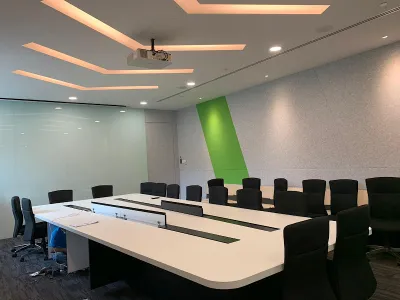
Meeting Rooms: Lots of hard surfaces (tables, screens, whiteboards) result in echoey, "hollow" audio on conference calls. Panels restore professional audio quality.
When to consider soundproofing instead?
This is where the distinction is critical. If your main issue is keeping noise out (intrusion) or keeping noise in (containment)—like blocking sirens, footsteps from upstairs, or preventing your drum practice from waking the baby—then absorption is not enough. You need sound isolation panels and construction techniques.
Soundproofing relies on four principles, none of which are fully addressed by standard acoustic panels:
Mass: Adding heavy materials (drywall, mass-loaded vinyl) to walls to make them harder to vibrate.
Damping: Using compounds that dissipate vibrational energy.
Decoupling: Separating wall layers so vibration cannot pass from one side to the other.
Absorption (inside the wall cavity): Using insulation to stop resonance inside the wall.
Many people search for sound proofing panels for walls hoping for a quick fix like a sticker or a lightweight foam tile. Unfortunately, true soundproofing usually involves construction work, such as adding mass to walls, sealing gaps and air leaks, or installing specialist soundproof doors and glazing.
Do acoustic panels reduce noise through walls?
Let's address the specific query many homeowners have when looking for soundproof wall panels for bedroom peace and quiet.
No, acoustic panels will not reduce noise transmission through walls.
They are designed to absorb sound waves reflected within the room. While they might reduce the overall volume level inside a room slightly (because sound isn't bouncing around amplifying itself), they do not have the density to stop sound from traveling through the wall structure. If you are interested in the technical nuances of this, we have a detailed guide answering: do acoustic panels keep sound in?
The Bottom Line
Acoustic panels won’t keep sound out—but they will dramatically improve the way a space sounds on the inside. If your goal is to control echo, reduce listener fatigue, and create a calmer, more productive environment, they are an excellent, cost-effective solution.
However, for issues with noise transfer (sound bleeding through walls), soundproofing (isolation) is the better, albeit more expensive, choice.
Can Feltcombo help?
At Feltcombo, we specialize in high-performance acoustic treatments. Whether you are an architect designing a new office or a homeowner improving a media room, we have the solutions to fix your internal acoustic issues.
We offer a range of aesthetic and functional options, from standard felt panels to premium acoustic panel factory direct designs. Our products are eco-friendly, easy to install, and highly effective at noise dampening.
👉 Looking for expert advice? If you are unsure whether you need acoustic panels or a different solution, contact the Feltcombo team today. We provide professional assessments to recommend the right acoustic strategy for your specific space.