


Where to Place Acoustic Panels: A Guide
Sound is a vital part of our sensory world. It allows us to communicate, enjoy music, and stay aware of our surroundings. A world without it would be disorienting. However, too much of a good thing can quickly become a problem. Excessive noise, echoes, and reverberation can turn a pleasant room into a chaotic environment.
Modern architecture loves hard, flat surfaces—drywall, glass, and concrete. While these look sleek, they are terrible for acoustics. Sound waves bounce off these surfaces endlessly, creating muddled audio. Knowing where to place sound panels is the secret weapon to taming these issues before they ruin your focus or relaxation.
The Problem with Audio Issues
Many of the daily frustrations we face in our homes and offices stem from invisible acoustic problems. When a group of people talks in a room with hard surfaces, the sound waves reflect back and forth. This increases the overall volume and makes speech intelligibility plummet.
When sound waves strike a smooth wall, they bounce back into the room. This creates echo (a distinct repetition of sound) and reverberation (a wash of sound that lingers). If left unchecked, this builds up into a roar of background noise, forcing everyone to shout to be heard—a vicious cycle known as the Lombard Effect.
How Acoustic Panels Work
Accoustic wall panels (often spelled "acoustic") are the most effective tool for breaking this cycle. They function by acting as a sponge for sound. instead of reflecting energy back into the room, they absorb it.
Standard panels, typically made from PET felt, mineral wool, or foam, trap sound waves within their porous structure. By strategically placing these soft surfaces on hard walls, you stop the reflection chain reaction.
Beyond absorption, you may also encounter diffusers and bass traps. Diffusers scatter sound to keep a room sounding "live" but controlled, while bass traps are thicker panels placed in corners to manage low-frequency energy that tends to build up in small rooms.
Why Does Placement of Acoustic Panels Matter?
Buying the panels is only half the battle; acoustic panel placement is the other half. You cannot simply throw panels on a wall randomly and expect studio-quality sound. Panels must be positioned where sound waves actually strike.
If you place panels too high or in a shadow zone, they won’t catch the reflections that matter. Conversely, covering every inch of wall space will make the room feel unnaturally "dead." The goal is a balanced residence acoustic profile—a mix of absorption and reflection that feels natural. Let's break down where to install panels based on the room type.
Where to Place Acoustic Panels in Great Rooms or Living Rooms
Living rooms and "great rooms" are notorious for bad acoustics, especially with today’s trends of high ceilings and open floor plans. Without treatment, these spaces can become echo chambers.
The primary target zone is the "speech level." Since most noise comes from people talking, you should center your panels between 4 and 6 feet off the floor. This catches the direct sound waves from our mouths before they hit the wall and bounce back. This simple sound panel placement strategy significantly reduces conversational clutter.
Panels Mounted to the Ceiling
In rooms with vaulted ceilings, walls aren't enough. The ceiling is a massive reflective highway for sound. Mounting panels here can drastically reduce the overall volume of the room. For DIYers, check out our comprehensive acoustic panel installation guide to see how to safely mount these overhead.
Suspended Panels
If direct mounting isn't an option, suspending panels is a stylish alternative.
Ceiling Clouds
Ceiling clouds hang freely from the ceiling structure. By floating in the air, they capture sound waves from both the bottom (direct sound) and the top (reflected sound). They also serve as a modern design focal point.
T-Grid System and Baffles
For commercial spaces or industrial-style homes, dropping panels into a T-grid is effective. Alternatively, you can use vertical baffles. If you are looking for a reliable sound baffles ceiling supplier, FeltCombo offers solutions that integrate seamlessly with lighting and sprinklers.
Where to Place Acoustic Panels in a Home Office
Remote work demands quiet. In a home office, the goal is clarity for Zoom calls and focus.
Place panels at seated ear level (usually around 4 feet high). Focus on the wall directly behind your monitor and the wall behind you. This stops your voice from bouncing off the screen and back into your microphone, and stops the echo from the wall behind you from muddying your audio.
Where to Place Acoustic Panels in a Home Studio
Studio placement is more scientific. The goal here is a "neutral" room that doesn't color the sound.
You must treat the "First Reflection Points." These are the spots on the side walls where sound from the speakers bounces once before hitting your ears. To find them:
Sit in your mixing chair.
Have a friend slide a mirror along the side wall.
When you see the speaker in the mirror, mark that spot.
Where to place sound panels? Right there.
Additionally, place panels behind your studio monitors to catch early reflections, and consider bass traps in the corners to tighten up the low end.
Where to Place Acoustic Panels in a Home Theater
Home theaters require a balance—you want to absorb distracting echoes but keep enough energy for the movie to feel exciting.
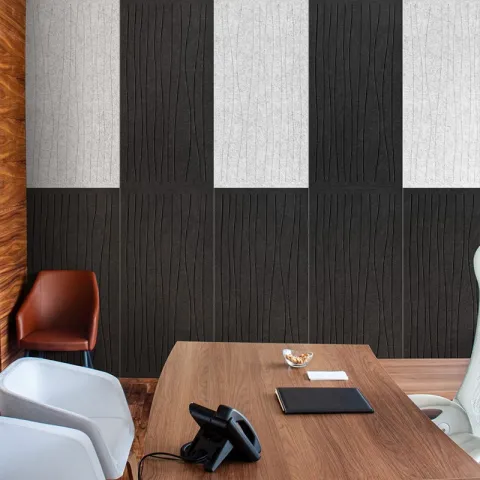
Focus on the side walls to prevent "flutter echo" (that metallic ringing sound). Place panels at ear height along the sides between the viewer and the screen. Also, treat the back wall behind the seating area to prevent sound from slapping back to the listener's ears.
Use Quality Materials
Knowing the theory is essential, but the materials dictate the result. Cheap foam often fails to absorb lower frequencies, leaving the room sounding muddy. High-density PET felt or mineral wool panels provide a much more even absorption curve across the frequency spectrum.
Whether you are fixing a noisy office or tuning a theater, FeltCombo is here to help. Reach out to our team for advice on products and layout strategies that fit your budget.